Tesco Clubcard AI meal planner: what launched, who can use it, and what to check
Separate Tesco’s reported September launch from unverified adoption claims, then review meal ideas, basket costs, allergies, and privacy before using an AI planner.
The news in one minute
Tesco’s AI meal-planning assistant has moved beyond an announcement, according to reporting published on 8 October 2026. The Guardian says the assistant was tested from April with 280,000 staff before being launched for customers in September. That is evidence of a reported customer launch. It is not evidence that every Clubcard holder has access, or that millions of people have used it.
This distinction matters when a headline attaches a figure such as “23 million” to an AI rollout. A loyalty programme’s membership is a potential audience, not an adoption metric. We could not substantiate 23 million active or enrolled users of this assistant from the sources reviewed. This guide therefore does not repeat that number as a usage claim.
Checked: 12 October 2026. We reviewed public reporting, not a signed-in Tesco account. The workflow below is a suggested review process, not a walkthrough of buttons we have tested.
What the evidence actually establishes
| Question | Evidence and limit |
|---|---|
| Was there a trial? | The Guardian reports staff testing from April 2026 involving 280,000 staff; it does not establish how many actively used it. |
| Has a customer launch been reported? | Yes: September 2026, in the 8 October report. |
| Is every Clubcard account enabled? | Not established by the reporting reviewed. Check your own account and Tesco’s current help. |
| Are there 23 million AI users? | Not substantiated. Membership, eligibility, activation, and active usage are different measures. |
| Is there a separate price? | A current AI-specific fee schedule was not verified. Do not assume that groceries or delivery are free. |
| Is this medical nutrition advice? | No basis for treating a shopping assistant as clinical advice. |
The useful timeline is April staff testing, September reported customer launch, and October public reporting. A launch date does not settle regional availability, account eligibility, or the completion of a phased rollout.
Why a supermarket wants an AI meal planner
Meal planning sits between inspiration and a shopping decision. A list of recipes may still require someone to combine ingredients, adjust portions, remember cupboard supplies, and price a basket. An assistant could make those transitions easier if it is connected to reliable product information.
That potential benefit is different from a measured result. We have not verified savings percentages, improvements in nutrition, or reductions in food waste for this product. A useful personal test is whether it reduces the time you spend preparing a realistic list while preserving your budget and dietary requirements. A convincing recipe alone does not pass that test.
Check availability before following a tutorial
Begin with Tesco’s official website or app and your normal account. Look for current information about the assistant and any eligibility, regional, or account requirements. If no entry point appears, consult Tesco help rather than assuming that updating the app guarantees access.
Avoid third-party pages that ask for Clubcard credentials to “activate” an AI feature. The feature name shown in your account may differ from “Clubcard AI meal planner.” Menu names, supported inputs, and integration with a basket need checking in the actual service.
A practical first-session workflow
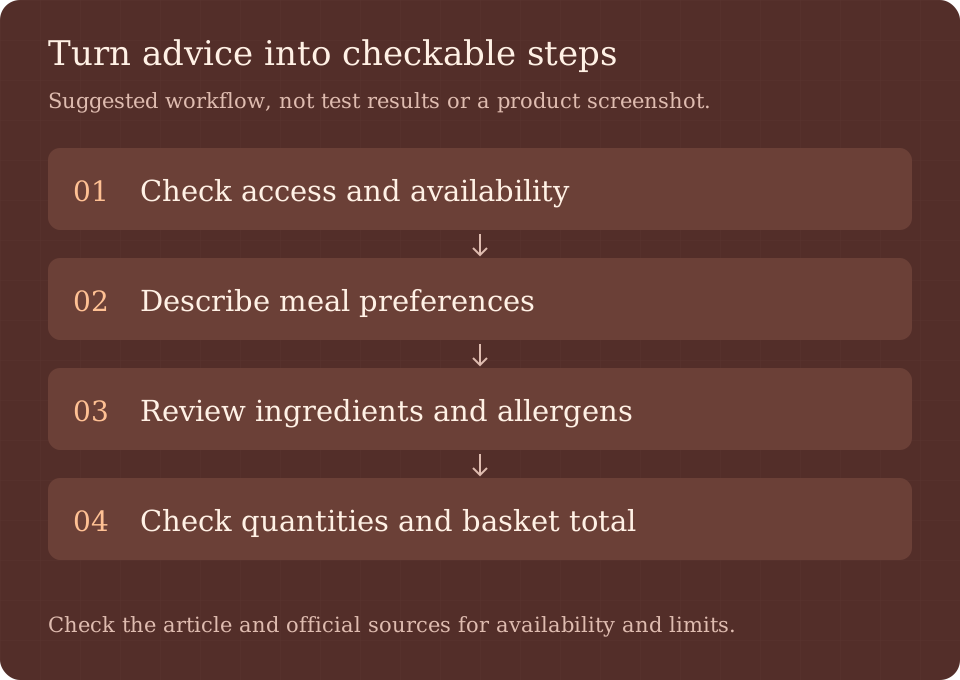
The illustration is an editorial workflow, not a screenshot or a claim about confirmed interface features.
- Define a small task. Start with three dinners for a stated number of people, not an entire month of meals.
- State practical constraints. Include the cooking time available, equipment, preferred ingredients, and a realistic spending ceiling.
- List what you already own. Ask for a draft that reuses those ingredients. Check quantities yourself.
- Review each proposed meal. Make sure ingredients, portions, preparation time, and storage requirements fit your household.
- Check the final basket. Confirm pack sizes, substitutions, current prices, and any delivery or collection charges before purchasing.
For example, “Draft three vegetarian dinners for two people, using the rice and chickpeas I already have, with no more than 30 minutes of active preparation” is clearer than “make me healthy meals.” This is a generic planning prompt, not evidence that every parameter is supported by Tesco’s assistant.
Budget against the basket, not the recipe estimate
A recipe can cost a small amount per portion while requiring larger packs at checkout. Oil, spices, and condiments may be counted as cupboard ingredients even when you need to buy them. Clubcard prices, offer dates, product availability, and substitutions can also change the total.
Compare the cash required today with the amount of food you will actually use. If a plan introduces five specialist ingredients for one dinner, a simpler alternative may suit your budget better. Repeated ingredients can reduce waste, but only when their storage life and your schedule make reuse realistic.
For a simple household trial, keep your usual three-dinner list and make an alternative draft with the assistant. Compare the two final baskets, count ingredients you would buy only for one dish, and record planning time. After cooking, note unused food and whether the portions were sufficient. This gives you a useful personal result without mistaking a retailer’s promotional claim for demonstrated savings.
Allergies and nutrition require a separate check
An AI-generated meal description is not the authoritative ingredient label. Review the current product listing and the packaging of the item delivered, including allergen statements and any substitutions. A recipe marked vegetarian, dairy-free, or high-protein does not establish that it meets another requirement such as a severe allergy restriction.
The UK Food Standards Agency’s allergy guidance is a better starting point for understanding labels and allergen information. People following a medically prescribed diet should use their clinician’s or dietitian’s guidance. Do not rely on the assistant to infer medical needs from purchase history, and do not accept a reassuring answer as a guarantee against cross-contact.
Privacy questions worth answering
Meal preferences can reveal more than taste: religion, household composition, and health-related needs may be inferred from them. Before supplying sensitive information, read the current Tesco privacy notice and any feature-specific explanation shown during use.
Check what inputs are retained, whether shopping history is used for personalisation, what controls are available, and whether the notice identifies outside service providers. We have not verified a particular model vendor, retention period, training policy, or opt-out mechanism for this assistant. Do not fill those gaps with assumptions borrowed from a different chatbot. A simple preference such as “avoid this ingredient” often supplies enough context without a medical history.
When the assistant is useful—and when to stop
Try it for meal inspiration, a first draft of a shopping list, or ideas for reusing ordinary ingredients. Stop and check primary information when it makes a precise claim about allergens, a discount, stock, a medical benefit, or a product’s ingredients.
A good result is a plan you can independently inspect. If a suggestion lacks quantities, exceeds your budget, or contradicts a product label, revise or discard it. For a general method of checking claims and their sources, see our Perplexity research guide.
Frequently asked questions
Has Tesco actually launched an AI meal planner?
The 8 October Guardian report says a customer launch followed in September after staff testing began in April. We attribute those dates to that report; we have not verified availability in every account.
Does “23 million Clubcard members” mean 23 million people use the AI?
No. Even if a membership figure is accurate for a given reporting period, it does not measure activation or usage of a particular feature. An adoption claim needs separate evidence.
Is the feature free?
A separate AI fee was not established in this review. Check the terms shown to you. Normal basket prices, minimum-order rules, and delivery or collection fees may still apply.
Can it safely plan meals for a food allergy?
Use any suggestions only as drafts. Check current ingredient and allergen information for every product and substitution; follow professional advice for your circumstances. A chatbot’s assurance is not a safety certification.
Sources and reporting limits
- The Guardian, 8 October 2026: Tesco trading report and meal-planner launch chronology.
- Tesco official website for current account access, product information, help, and privacy links.
- UK Food Standards Agency: food allergy and intolerance.
Source review date: 12 October 2026. Reporting establishes a launch chronology, not universal access, measured user adoption, or a tested feature specification. We have not performed a signed-in product test.