
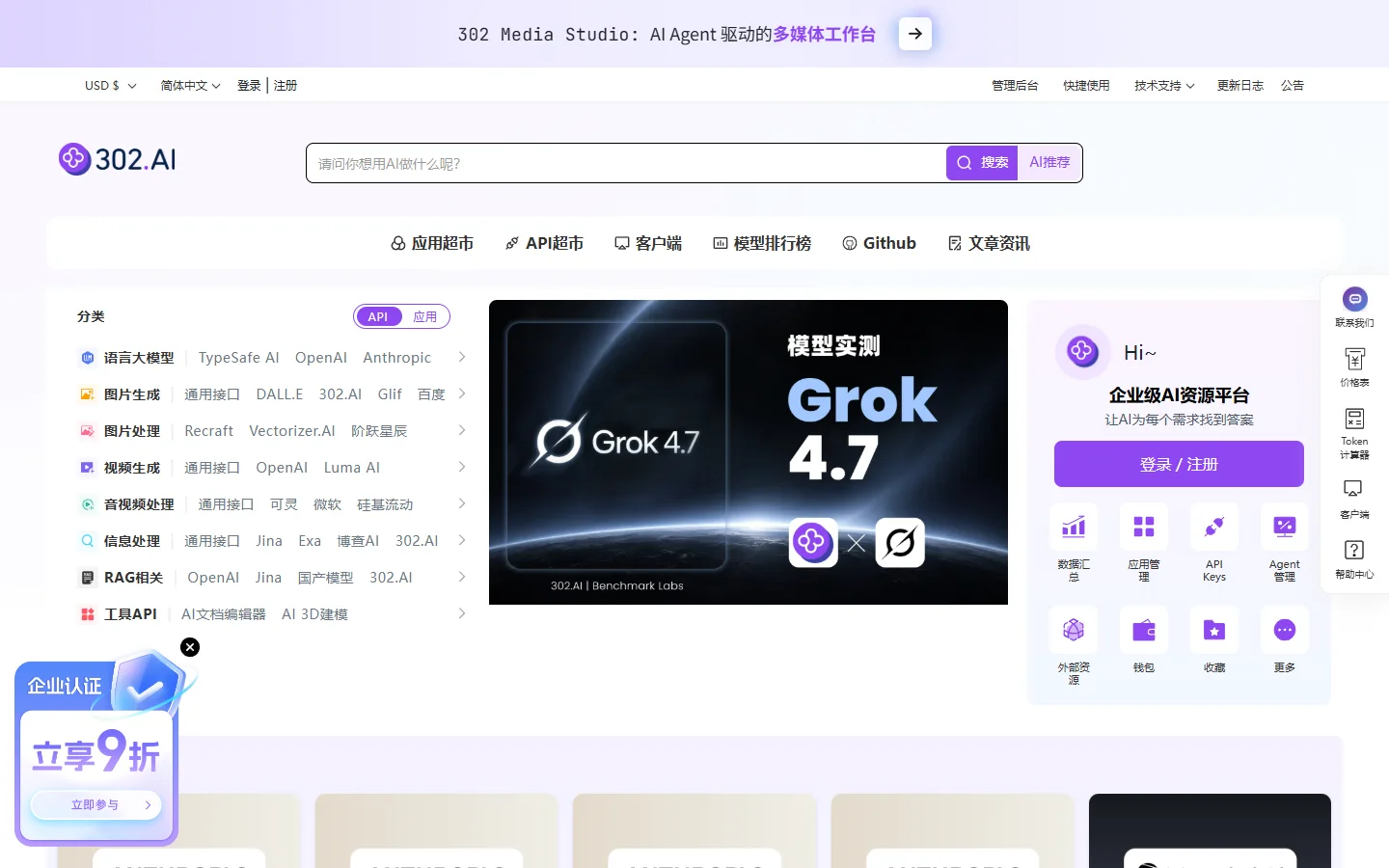
Using 302.AI as a Multi-Model Platform: Set Rules Before Unifying Access
How teams can compare multiple models and AI applications through 302.AI while tracking routing, data boundaries, and provider changes.
302.AI brings multiple model APIs and ready-to-use AI applications into one platform, spanning text, image, video, audio, search, and related work. For teams that compare providers regularly or want fewer separate entry points, aggregation can reduce repeated setup and account administration.
Compare tasks instead of model lists
Break the actual workload into small tasks such as drafting copy, generating an image, processing audio, or searching the web. Prepare the same sanitized examples for each candidate and record output quality, human editing, response time, and failures. The result is a comparison of work delivered rather than a snapshot of a model catalog that will soon change.
Record the route behind each result
A unified interface is convenient, but it can make the upstream provider less visible. Production use should record the model, time, input boundary, and fallback used for each important workflow. Availability, provider terms, and routing behavior can change. Critical tasks need an explicit backup and a fixed set of examples that can be rerun after a change.
Design data boundaries with access
State which material may be sent, what must be redacted, and what must never enter a third-party model. Customer information, source code, and internal files require a review of both the platform and upstream processing terms. Aggregation improves access; quality review, policy compliance, and final responsibility remain with the team.